Install Utilities Without Cutting Through Your Property
Directional Boring in Great Falls for water lines and utilities that cross driveways, roads, or landscaped areas
Apple Valley Backhoe Service uses directional boring to route underground utilities beneath paved surfaces, established landscaping, and other obstacles without open trenching. You preserve driveways, sidewalks, and turf while installing new water lines, electrical conduit, or other infrastructure. This method is especially useful when crossing areas where excavation would require extensive restoration or when working around frozen ground that makes traditional trenching impractical.
The process involves drilling a pilot hole along a planned path, then pulling the utility line back through the bored tunnel. The entry and exit pits are small, and the surface between them remains undisturbed. In Montana, where frost depth and compacted clay can complicate open-cut installations, boring reduces the time spent dealing with soil removal, shoring, and backfill compaction across long distances.
If you need a water line from the street to your house and want to avoid tearing up your driveway or yard, contact us to evaluate the route and confirm boring is appropriate for your site conditions.
Why Boring Works Better for Certain Installations
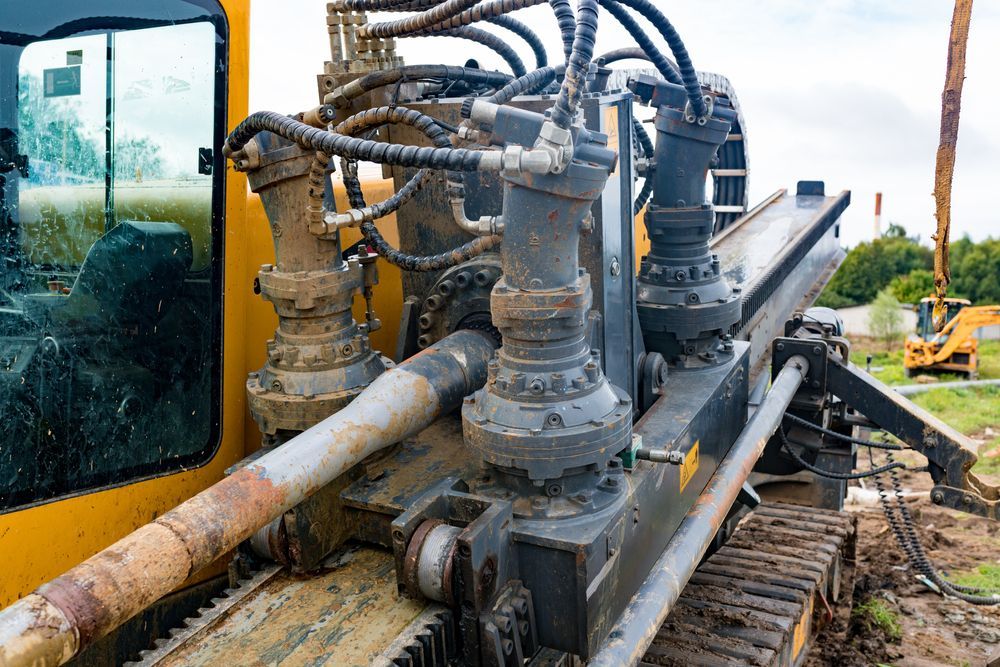
Boring equipment includes a drill head that advances underground while tracking tools monitor depth and direction. The operator adjusts angle and steering in real time to follow the planned path and avoid existing utilities. Once the pilot hole is complete, a reamer enlarges the bore to the required diameter, and the new line is pulled through in one continuous length.
After the work is done, you will see only the small entry and exit pits, which are backfilled and graded to match surrounding surfaces. Your driveway, lawn, or paved area remains intact, and there is no need to schedule asphalt or concrete repair. Apple Valley Backhoe Service completes the installation with less surface impact and typically in less time than open trenching across the same distance.
Boring is not suitable for every job. Rocky subsurface conditions, very shallow utility runs, or areas with dense concentrations of existing underground infrastructure may require alternative methods. A site visit and utility locate are performed before drilling begins to confirm the path is clear and the soil is compatible with boring equipment.
Common Questions About Boring for Utilities
Homeowners and contractors in Great Falls often want to know how boring compares to trenching, what utilities can be installed this way, and whether soil type affects the process.
What types of utilities can be installed with directional boring?
Water lines, electrical conduit, gas lines, and communication cables are all commonly installed using boring, as long as the diameter and material are compatible with pulling equipment.
How deep can a bore go?
Depth depends on soil conditions and equipment, but most residential bores run between three and six feet deep to stay below frost line and clear existing utilities.
Why is boring more efficient than trenching?
You eliminate the need to excavate, haul, and backfill soil along the entire route, and you avoid the restoration costs associated with repairing driveways, landscaping, or paved surfaces.
When is trenching still necessary?
If the route is very short, soil contains large boulders, or the utility must be installed at a shallow depth with frequent access points, open trenching may be more practical.
How does soil type in Great Falls affect boring?
Clay and compacted soils bore well, but rocky subsurface layers or areas with heavy cobble may slow progress or require alternative routing.
Apple Valley Backhoe Service evaluates your site, locates existing utilities, and confirms the bore path before starting work. If you are planning a utility installation and want to avoid surface disruption, reach out to discuss your project and schedule a site assessment.