Water Line Replacement Without Tearing Up Your Property
Trenchless water lines in Great Falls for replacing aging pipe runs without excavating driveways, landscaping, or access roads
Apple Valley Backhoe Service installs and replaces water lines using trenchless methods that avoid the full-length trenching typical of traditional excavation. Instead of digging a continuous trench from your well or connection point to the house, the crew bores a narrow path underground and pulls new pipe through. You keep your driveway intact, your lawn undisturbed, and your project timeline shorter than conventional dig-and-replace jobs.
Trenchless installation works especially well for rural properties in Great Falls and outlying areas where water lines often run several hundred feet across open ground, under gravel roads, or through areas with mature trees and established landscaping. The process requires entry and exit pits at each end, but the path between stays underground and untouched. Modern pipe materials pulled through these bores resist freezing, root intrusion, and ground movement, so the new line outlasts the old one without the site disturbance.
If you're dealing with low pressure, rusty water, or repeated leaks along an old galvanized or copper line, contact us to assess whether trenchless replacement fits your site and budget.
How Trenchless Methods Reduce Site Impact
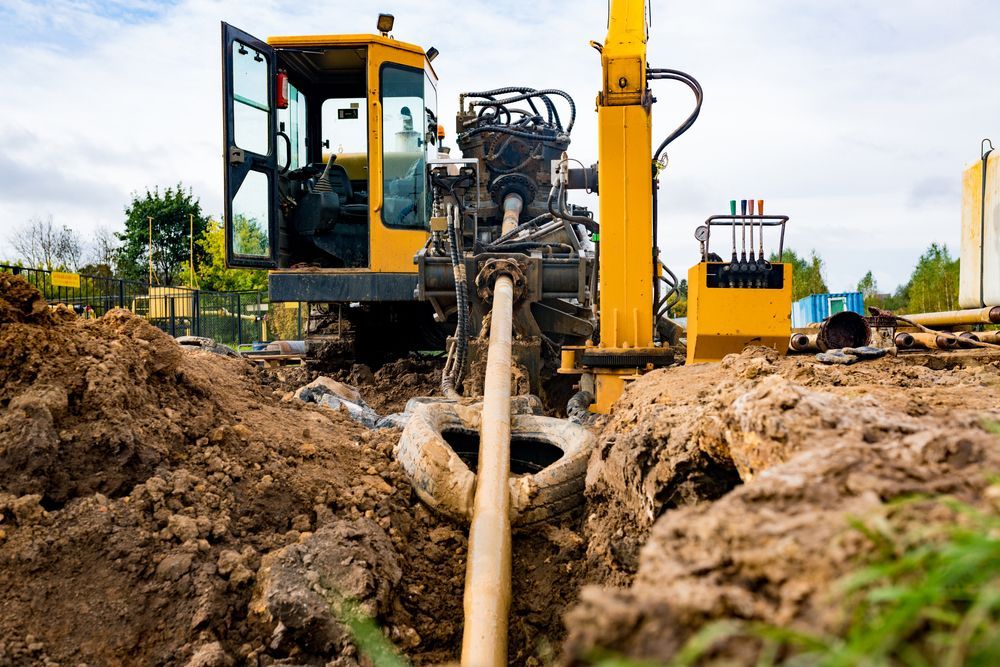
The crew positions a boring machine at the starting point and steers a drill head along the planned route, using locating equipment to track depth and alignment. Once the bore is complete, the new water line attaches to the drill string and gets pulled back through the hole. The process leaves a narrow tunnel just wide enough for the pipe, and surface restoration involves only the small entry and exit pits.
After installation, you'll notice improved water flow, no more discolored water from corroded pipe, and a system that handles freeze-thaw cycles without the joint failures common in older installations. Apple Valley Backhoe Service uses trenchless techniques alongside conventional excavation, choosing the method that makes sense for your terrain, pipe depth, and obstacles. The result is a water line that delivers reliable pressure and quality without the weeks of site disruption that come with open trenching.
Trenchless work also cuts down on gravel replacement, reseeding, and asphalt patching. You avoid the costs and delays of rebuilding driveways or access roads, and the finished grade remains stable because the surrounding soil stays compacted and undisturbed. For long rural runs, this approach often finishes faster and cleaner than traditional methods.
Common Questions About Trenchless Installation
Property owners in Great Falls often want to know how trenchless methods compare to conventional trenching and what limitations might apply to their specific site. Here are answers to the most common questions.
What types of soil work best for trenchless boring?
Stable soils with consistent density allow for accurate steering and smooth pipe installation, while rocky or highly variable ground may require adjustments or alternative routing.
How do you avoid existing utilities during the bore?
The crew uses locating equipment to map out underground lines before drilling and adjusts the bore path to maintain safe clearance from gas, electric, and communication cables.
When is trenchless installation not practical?
Sites with very shallow water tables, extensive bedrock near the surface, or extremely short runs where setup costs outweigh trenching may be better served by conventional excavation.
Why does trenchless work cost more upfront than open trenching?
The specialized boring equipment and setup time add to initial costs, but savings from reduced site restoration, faster timelines, and minimal landscape damage often balance the difference in Great Falls installations.
What size water lines can be installed trenchless?
Residential and light commercial lines up to two inches in diameter are commonly installed this way, with larger mains requiring heavier equipment or modified techniques.
Apple Valley Backhoe Service evaluates each site to determine the most efficient installation method and coordinates boring, pipe placement, and connection work as a complete package. Call (406) 454-0332 to schedule a water line assessment and get a project estimate.